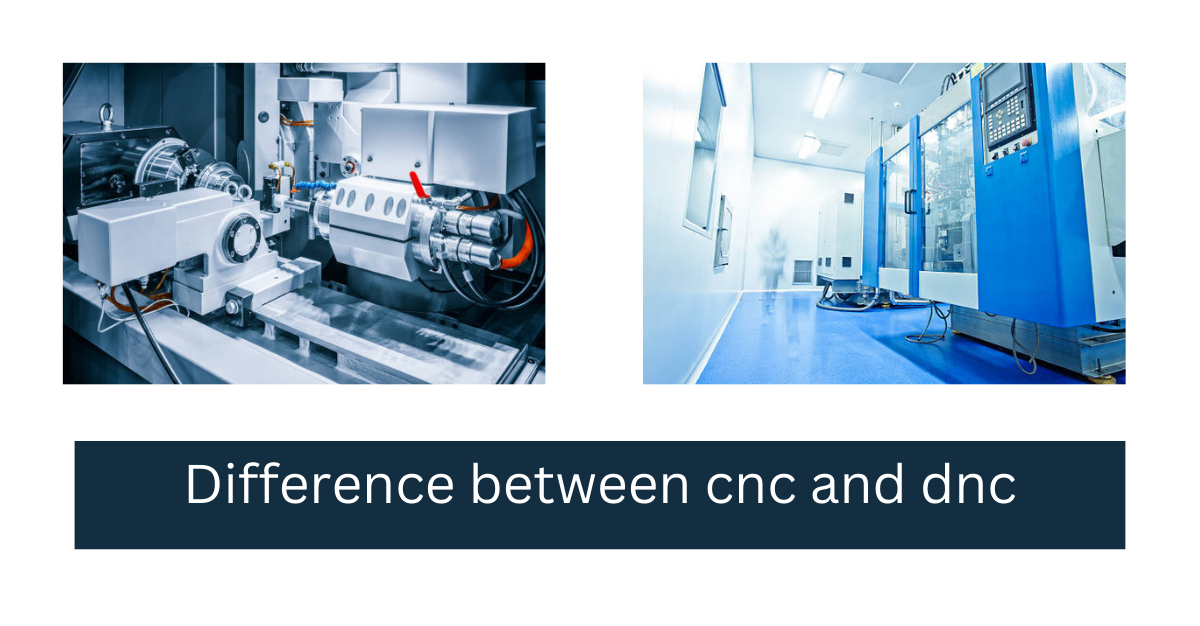
Modern manufacturing industries rely heavily on automation, precision, and efficient machine control systems to improve productivity and reduce operational errors. Two of the most commonly used technologies in industrial machining are CNC and DNC systems.
Although these terms are often used interchangeably, CNC (Computer Numerical Control) and DNC (Distributed Numerical Control) serve different purposes in manufacturing environments.
CNC systems are designed to control individual machines using programmed instructions, while DNC systems help manage and coordinate multiple CNC machines through a centralized network.
Understanding the difference between CNC and DNC is important for manufacturers, factory operators, engineers, and production managers looking to improve machining efficiency, scalability, and automation capabilities.
In this guide, we will explore:
- What CNC and DNC systems are
- How they work
- Key differences between CNC and DNC
- Advantages and limitations
- Industrial applications
- Which system is better for different manufacturing environments
What is CNC?
CNC stands for Computer Numerical Control.
It is a manufacturing process in which machine tools such as lathes, mills, routers, and grinders are controlled through pre-programmed computer software.
A CNC machine follows coded instructions, commonly known as G-code, to perform highly accurate machining operations automatically.
Unlike manual machining, CNC systems reduce human intervention and ensure high precision, consistency, and repeatability.
How CNC Machines Work
The CNC machining process generally follows these steps:
- A product design is created using CAD (Computer-Aided Design) software.
- The CAD file is converted into machine instructions using CAM (Computer-Aided Manufacturing) software.
- The generated G-code is loaded into the CNC machine.
- The machine controller interprets the code and executes machining operations automatically.
The CNC controller manages:
- spindle movement
- cutting speed
- feed rate
- tool positioning
- axis movement
Common Types of CNC Machines
- CNC Milling Machines
- CNC Turning Machines
- CNC Lathes
- CNC Routers
- CNC Grinding Machines
- CNC Laser Cutting Machines
Advantages of CNC Machines
- High precision and accuracy
- Consistent product quality
- Reduced manual labor
- Faster production cycles
- Better repeatability
- Lower chances of human error
- Ability to produce complex components
Applications of CNC Machines
CNC machining is widely used in:
- Automotive industry
- Aerospace manufacturing
- Medical equipment production
- Defense engineering
- Electronics manufacturing
- Industrial equipment manufacturing
What is DNC?
DNC stands for Distributed Numerical Control or Direct Numerical Control.
A DNC system is designed to centrally manage and control multiple CNC machines through a computer network.
Instead of storing machining programs individually on each CNC machine, DNC systems use a central server to send, manage, and monitor machining instructions across multiple machines simultaneously.
DNC technology is commonly used in large-scale manufacturing environments where centralized production management and real-time machine communication are essential.
How DNC Systems Work
In a DNC setup:
- A central computer stores machining programs.
- Multiple CNC machines are connected through a network.
- The server transmits programs directly to machines when required.
- Operators can monitor machine status, production progress, and machine performance centrally.
DNC systems also support:
- drip feeding large programs
- centralized data storage
- production monitoring
- machine communication
- manufacturing automation
Advantages of DNC Systems
- Centralized machine management
- Better production control
- Reduced program duplication
- Easier program updates
- Improved scalability
- Real-time monitoring
- Enhanced manufacturing efficiency
Applications of DNC Systems
DNC systems are commonly used in:
- Large manufacturing plants
- Aerospace component production
- Automotive factories
- Smart manufacturing facilities
- Industrial automation environments
CNC vs DNC: Key Differences
| Feature | CNC | DNC |
| Full Form | Computer Numerical Control | Distributed Numerical Control |
| Control Type | Individual machine control | Centralized multiple machine control |
| Program Storage | Stored locally in machine | Stored on central server |
| Connectivity | Standalone operation | Network-based operation |
| Machine Management | Single machine | Multiple CNC machines |
| Scalability | Limited | Highly scalable |
| Automation Level | Moderate | Advanced |
| Monitoring | Manual monitoring | Centralized monitoring |
| Cost | Lower initial cost | Higher setup cost |
| Best For | Small manufacturing setups | Large industrial operations |
How CNC Systems Improve Manufacturing
CNC machines have transformed manufacturing by enabling highly accurate machining operations with minimal manual intervention.
Key Benefits of CNC Technology
- Precision Manufacturing
CNC machines can produce highly accurate parts with tight tolerances.
- Increased Productivity
Automated machining reduces production time and improves output efficiency.
- Repeatability
The same component can be produced repeatedly with consistent quality.
- Reduced Human Error
Automation minimizes mistakes caused by manual operations.
- Complex Part Production
CNC systems can manufacture intricate components that are difficult to produce manually.
How DNC Systems Improve Manufacturing Efficiency
DNC systems are designed to optimize production management across multiple machines.
Key Benefits of DNC Technology
- Centralized Program Management
All machining programs are managed from one central server. - Real-Time Machine Monitoring
Manufacturers can monitor machine performance and production status instantly.
- Improved Production Coordination
Multiple machines can work together efficiently using shared data.
- Better Data Security
Programs are centrally stored, reducing the risk of data loss.
- Industry 4.0 Integration
DNC systems support smart factory and industrial automation initiatives.
CNC vs DNC: Which is Better?
The choice between CNC and DNC depends on manufacturing requirements, production scale, and operational complexity.
CNC is Better For:
- Small manufacturing businesses
- Independent machine operations
- Low-volume production
- Simpler machining requirements
- Cost-sensitive operations
DNC is Better For:
- Large manufacturing facilities
- Multi-machine production environments
- High-volume manufacturing
- Smart factories
- Advanced industrial automation
In many modern factories, CNC and DNC systems work together to create efficient and scalable manufacturing operations.
Role of CNC and DNC in Industry 4.0
Industry 4.0 focuses on automation, connectivity, data exchange, and smart manufacturing technologies.
Both CNC and DNC systems play an important role in this transformation.
CNC in Smart Manufacturing
Modern CNC machines support:
- automation
- IoT integration
- advanced programming
- precision engineering
DNC in Smart Factories
DNC systems enable:
- centralized production management
- machine networking
- predictive maintenance
- real-time analytics
- factory-wide automation
As industries continue adopting digital manufacturing technologies, DNC systems are becoming increasingly important for large-scale production environments.
Industrial Applications of CNC and DNC Systems
Automotive Industry
Used for manufacturing:
- engine components
- transmission parts
- precision automotive components
Aerospace Industry
Supports production of:
- turbine blades
- aircraft components
- high-precision aerospace parts
Medical Industry
Used in:
- surgical instruments
- implants
- precision medical devices
Defense Industry
Helps manufacture:
- weapon components
- military equipment
- high-tolerance engineering parts
Heavy Engineering
Supports production of:
- industrial machinery
- heavy equipment components
- precision mechanical assemblies
Frequently Asked Questions (FAQs)
What is the main difference between CNC and DNC?
CNC controls individual machines independently, while DNC centrally manages multiple CNC machines through a networked system.
Is DNC more advanced than CNC?
DNC is considered more advanced for large-scale manufacturing because it supports centralized monitoring, machine communication, and production management.
Can CNC machines work without DNC?
Yes. CNC machines can operate independently without requiring a DNC system.
Why do factories use DNC systems?
Factories use DNC systems to improve production coordination, monitor multiple machines, manage programs centrally, and support automation.
What industries use DNC systems?
Industries such as aerospace, automotive, heavy engineering, and smart manufacturing facilities commonly use DNC systems.
Is DNC important for Industry 4.0?
Yes. DNC systems support smart manufacturing, real-time monitoring, industrial networking, and factory automation, making them highly relevant for Industry 4.0 initiatives.
Conclusion
CNC and DNC technologies are both essential components of modern manufacturing systems.
CNC machines provide precise and automated control for individual machining operations, while DNC systems enable centralized management of multiple CNC machines across industrial production environments.
For smaller manufacturing setups, CNC systems are often sufficient. However, large-scale factories and smart manufacturing facilities benefit significantly from DNC systems due to their scalability, centralized control, and automation capabilities.
As manufacturing industries continue evolving toward Industry 4.0 and digital transformation, both CNC and DNC technologies will remain critical for achieving efficiency, precision, and production excellence.
For advanced precision machining solutions and high-quality manufacturing services, Ganesh Precision Industries continues to deliver reliable engineering expertise for modern industrial requirements.