
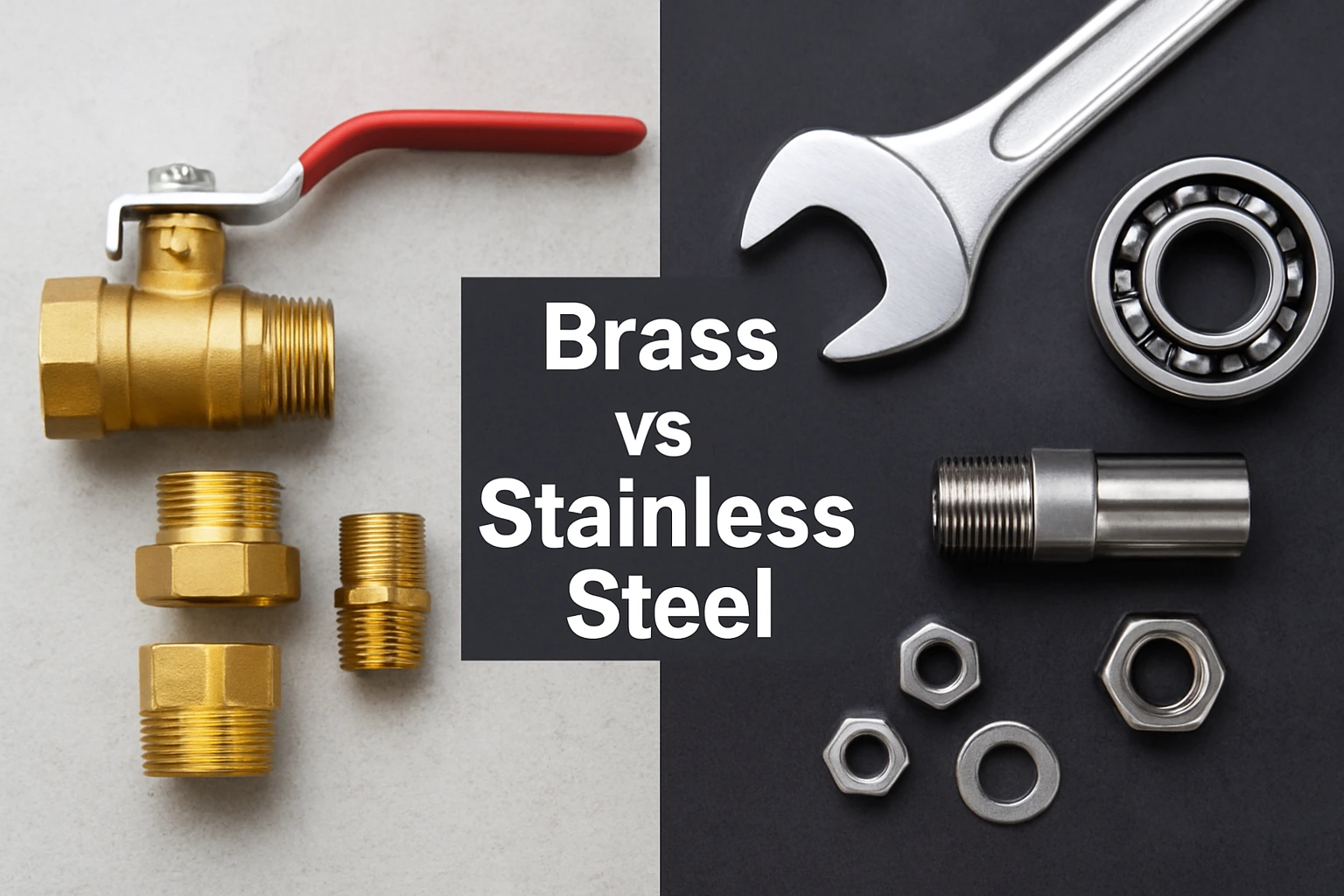
Explore the key differences between brass and stainless steel, including their features, use cases, and how to decide the best fit for your industrial needs.
Material Selection in Industrial Components
Industrial components must operate reliably in varying conditions. Choosing the right material is crucial to their long-term performance and durability. Brass and stainless steel are two widely used materials, each offering specific benefits. Understanding these differences helps you make an informed and accurate choice.
Key Takeaways
- Brass turned parts are best suited for applications that need good electrical conductivity and smooth machining. They’re often used by brass manufacturers for custom, high-precision components.
- Stainless steel is ideal for high-load, heat-intensive, or corrosive environments where strength is essential.
- Brass neutral link components are widely used in electrical setups due to their excellent conductivity and reliability.
- Choose experienced brass manufacturers for fast production and cost-effective precision parts. Stainless steel is better for structural and long-term use in harsh conditions.
Brass: Properties and Use Cases
Brass is a metal alloy primarily composed of copper and zinc, known for its strength, conductivity, and ease of machining. It is well-regarded for its machinability, corrosion resistance in mild environments, and excellent electrical conductivity. These properties make it ideal for creating complex parts with precision.
Many brass manufacturers use it for components in plumbing, electronics, and electrical systems. It is commonly used in brass neutral link applications because of its high conductivity and low sparking potential. Brass turned parts are frequently found in the automotive, telecommunications, and electronics sectors.
Brass also has antimicrobial properties, making it suitable for some hygienic uses. However, its softness compared to other metals limits its application in high-stress environments.
Stainless Steel: Properties and Use Cases
Stainless steel is a durable alloy consisting of iron, carbon, and chromium. It is known for its corrosion resistance, strength, and ability to perform well in high-temperature and chemical environments. Stainless steel is widely used in industries where parts must handle stress and exposure to harsh conditions.
Although it doesn’t offer the electrical conductivity of brass, stainless steel provides greater structural integrity and mechanical strength. It is often used in machinery parts, medical devices, food processing equipment, and chemical systems.
Cost Considerations
Cost often influences the decision between brass and stainless steel. Brass typically costs more per pound compared to many other metals. However, it is cheaper to machine, making brass turned parts cost-effective for detailed components.
Stainless steel tends to be less expensive as a raw material but is harder to machine, which increases tooling and labor costs. Overall project expenses can vary based on the part complexity and volume.
Corrosion Resistance Comparison
Both materials offer corrosion resistance but under different conditions. Brass performs well in wet or marine environments, but it is not suitable for contact with ammonia-based substances.
Stainless steel provides reliable resistance across a wider range of conditions, including exposure to chemicals, moisture, and high heat. It is often the preferred choice in more aggressive industrial environments.
Conductivity and Heat Transfer
Brass excels in electrical and thermal conductivity. It is commonly chosen for connectors, terminals, and brass neutral link components in power systems.
Stainless steel’s low electrical conductivity makes it an unsuitable choice for most electrical component applications. It is better suited for parts that require strength and durability over conductivity.
Machining Efficiency
Brass is highly machinable, allowing for quick, accurate, and efficient production of complex components. This makes it a top choice for brass manufacturers producing high-volume brass turned parts.
Stainless steel is more difficult to machine and wears tools faster. However, it remains essential for making tough components in heavy-duty industries.
Applications
| Applications of Brass & Stainless Steel | ||
| Application Area | Brass | Stainless Steel |
| Electrical Components | Used in brass neutral link, terminals, connectors due to high conductivity | Not suitable due to low electrical conductivity |
| Plumbing | Ideal for fittings, valves, taps, and fixtures in water systems | Used for pipes and fittings in high-pressure or corrosive systems |
| Precision Engineering | Common for brass turned parts in automotive, electronics | Used for precise components under stress in machinery |
| Marine Applications | Suitable for non-corrosive saltwater environments | Used in marine hardware for high corrosion resistance |
| Decorative Hardware | Preferred for door handles, locks, and lighting elements | Used for modern, industrial-style finishes and fixtures |
| Aerospace | Limited use in non-critical components | Widely used in structural parts, fasteners, and engine components |
| Food & Medical Industry | Rarely used due to reactivity | Preferred for hygiene, corrosion resistance, and non-reactivity |
| Construction | Limited to electrical and aesthetic uses | Used for structural frameworks, fasteners, and high-strength parts |
| Automotive | Used in electrical and fluid connectors | Employed in engine parts, exhausts, and structural supports |
| Chemical Industry | Not recommended in chemical environments | Excellent for tanks, valves, and pipelines exposed to harsh chemicals |
Environmental Factors
Both materials are recyclable. Brass consumes less energy during machining, helping reduce emissions in the manufacturing process. Stainless steel is energy-intensive but highly durable, which supports long-term sustainability in many industries.
Bottom Line
Your choice between brass and stainless steel should be based on performance needs, budget, and working conditions. Use brass turned parts when accuracy, electrical performance, and machinability matter. Choose stainless steel for durability, strength, and exposure to harsh elements.
At Ganesh Precision, we specialize in high-quality brass turned parts and brass neutral link components. As expert brass manufacturers and trusted CNC manufacturers in India, we offer reliable, custom solutions tailored to meet your industry needs.
Let’s build your next component with precision. Contact us today to get started.