Stainless-steel fittings are essential components in piping systems used across manufacturing plants, chemical processing units, food industries and water treatment facilities. They connect pipes, change flow directions, divide fluid lines and control pipe sizes. The right fitting maintains secure connections and supports smooth piping system operation.
Different fittings serve different purposes. Their design, size, material grade and connection method depend on the pipeline layout and operating conditions. Understanding these differences helps engineers and buyers select suitable products for their applications.
What are stainless-steel fittings?
Stainless-steel fittings are connectors used to join pipes or modify the arrangement of a piping system. They are available in different shapes and configurations to meet specific installation requirements.
Stainless-steel is widely used for its corrosion resistance, strength, and durability. These properties make it suitable for applications involving water, chemicals, food products and other process fluids.
Before selecting fittings, buyers should consider:
- Pipe diameter and wall thickness
- Operating pressure and temperature
- Type of fluid passing through the pipeline
- Required connection method
- Material grade and applicable standards
What are the different types of stainless-steel fittings?
Each fitting performs a specific function in a piping arrangement. Here are some commonly used types.
1. Stainless-steel Elbows
Elbows change a pipeline’s direction without requiring a major layout change. They are commonly available in 45-degree and 90-degree configurations. A 180-degree return bend is also used in certain systems.
Common uses:
- Changing pipe direction around machinery or structures
- Connecting pipeline sections in confined spaces
Routing fluid lines in industrial plants
2. Stainless-steel Tees
A tee creates a branch connection from the main pipeline. It has three openings and allows fluid to move into another line or combine with the main flow.
Two common types include:
- Equal tee: All three openings have the same nominal size.
- Reducing tee: The branch opening is smaller than the main pipe connections.
Tees are used in water distribution, chemical processing and industrial fluid systems.
3. Stainless-steel Reducers
Reducers connect pipes with different diameters. They help transition between larger and smaller pipeline sections.
The two main types are:
- Concentric reducer: Both ends share a common centreline. It is generally used in vertical pipe arrangements.
- Eccentric reducer: Its centreline is offset. It is often selected for horizontal pipelines where air or liquid accumulation needs to be managed.
4. Stainless-steel Couplings
Couplings join two pipe sections, usually of the same nominal diameter. They are available in different designs, including threaded and welded configurations.
They are useful when extending pipelines, joining pipe lengths or connecting compatible sections in industrial installations.
5. Stainless-steel Unions
Unions connect two pipe sections while allowing them to be separated more easily than permanent welded joints. They are useful in systems that require regular inspection, cleaning or maintenance.
These fittings are commonly found in utility lines, equipment connections and smaller industrial piping arrangements.
6. Stainless-steel Caps and Plugs
Caps and plugs close open pipe ends or unused connection points. A cap fits over the pipe end, while a plug is generally inserted into a compatible opening.
They are used during installation, maintenance, and testing, as well as to close pipeline sections that are no longer in use.
7. Stainless-steel Cross Fittings
A cross fitting has four openings and connects four pipe sections at a single junction. It lets a pipeline branch in multiple directions and is used for layouts that require a four-way connection.
Where are stainless-steel fittings commonly used?
Stainless-steel fittings are used across industries because different grades and configurations can meet varied operating requirements.
Industry | Common applications |
Food and beverage | Processing and fluid transfer lines |
Pharmaceutical | Process piping and hygienic systems |
Chemical | Pipelines carrying process chemicals |
Water treatment | Water distribution and treatment lines |
Oil and gas | Industrial process and utility piping |
Power generation | Cooling and auxiliary piping systems |
The fitting type and material grade should match the application. For example, a system exposed to chlorides or certain chemicals may require a different stainless-steel grade from a general-purpose water line.
How to choose the right stainless-steel fittings?
Selecting a fitting involves more than checking its shape and size. Buyers should review the following factors:
- Material grade: SS 304 is commonly used for general applications, while SS 316 offers better resistance to chloride-related corrosion. The final choice depends on the service environment.
- Dimensions: Check the pipe size, wall thickness and fitting dimensions to ensure compatibility.
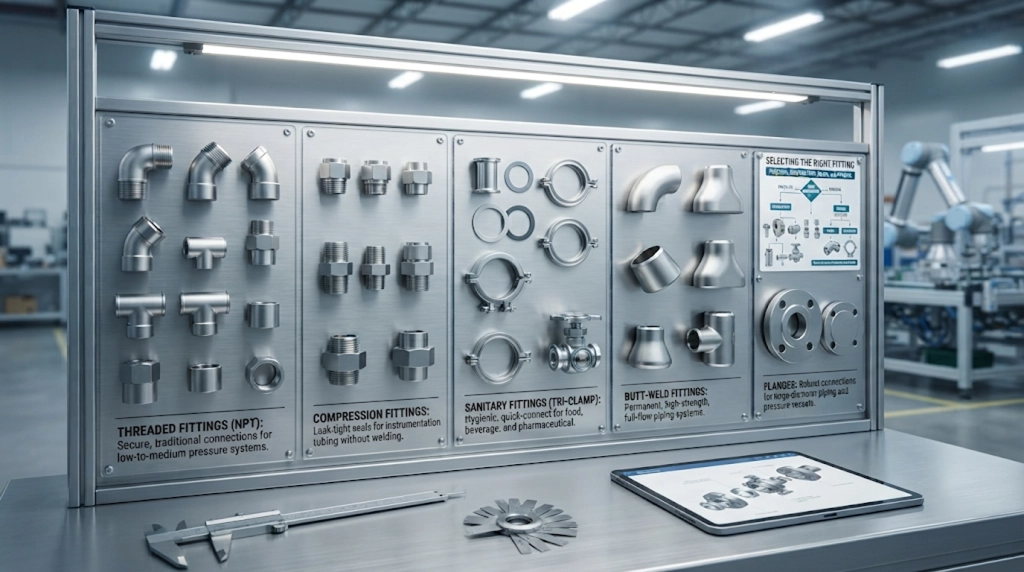
- Connection type: Choose between threaded, socket-weld, and butt-weld connections based on the piping design.
- Operating conditions: Consider the pressure, temperature and type of fluid in the system.
- Manufacturing quality: Check dimensional accuracy, surface condition and material specifications.
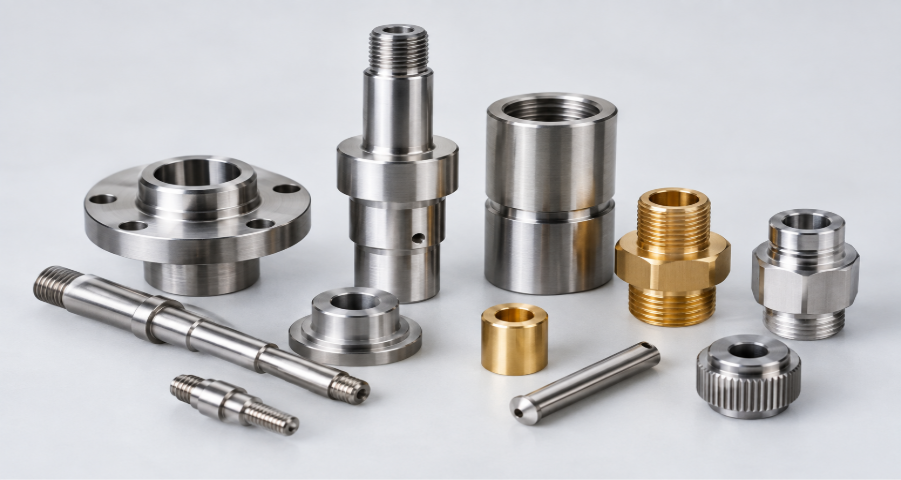
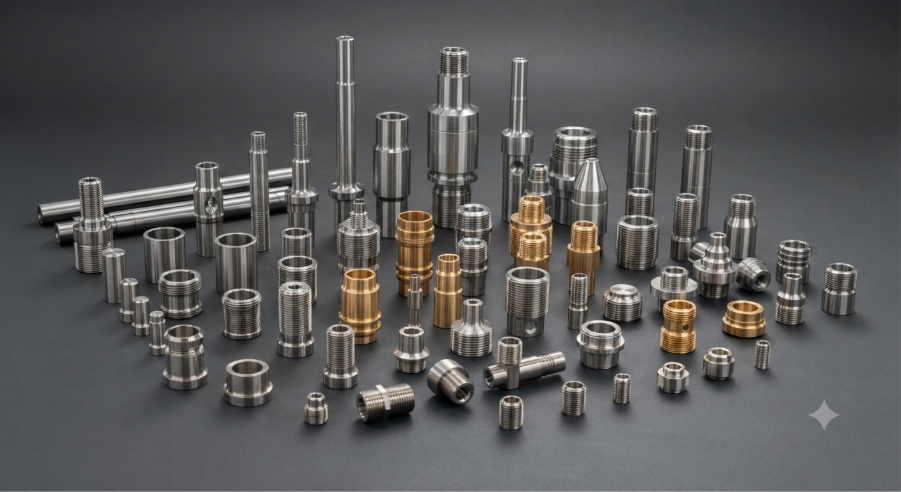
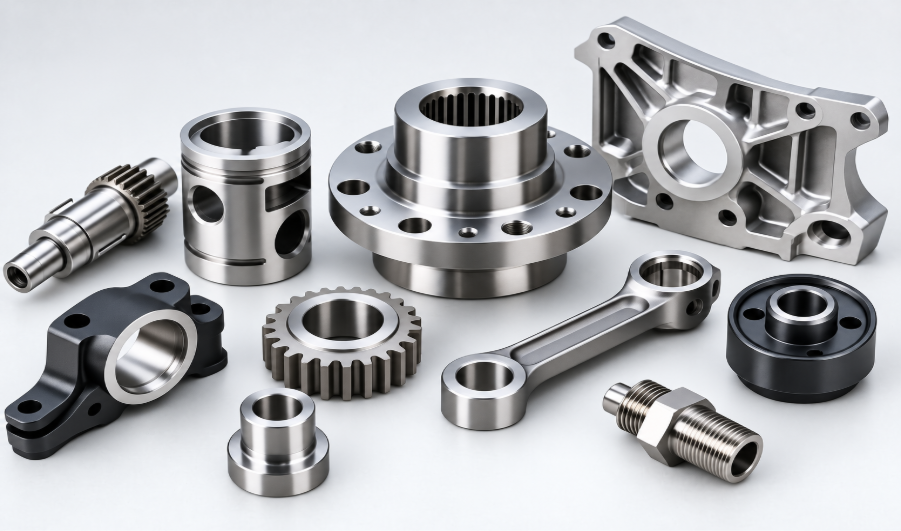
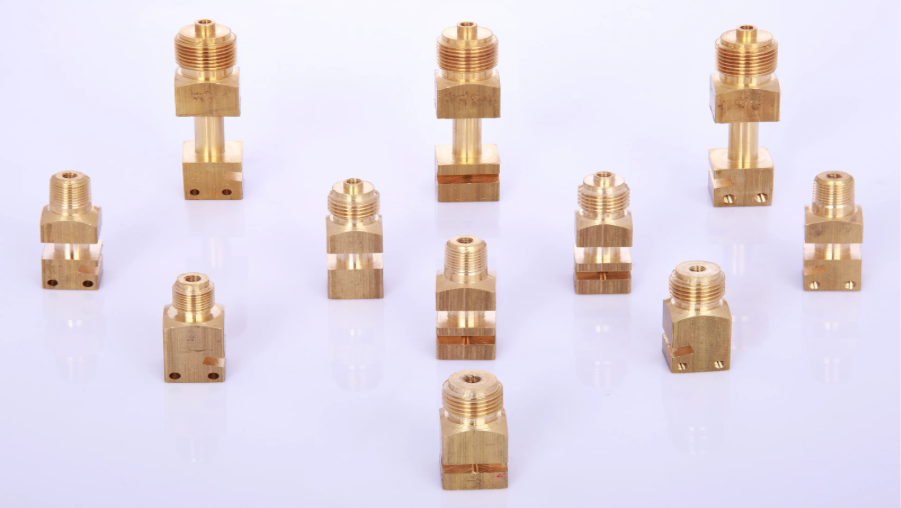
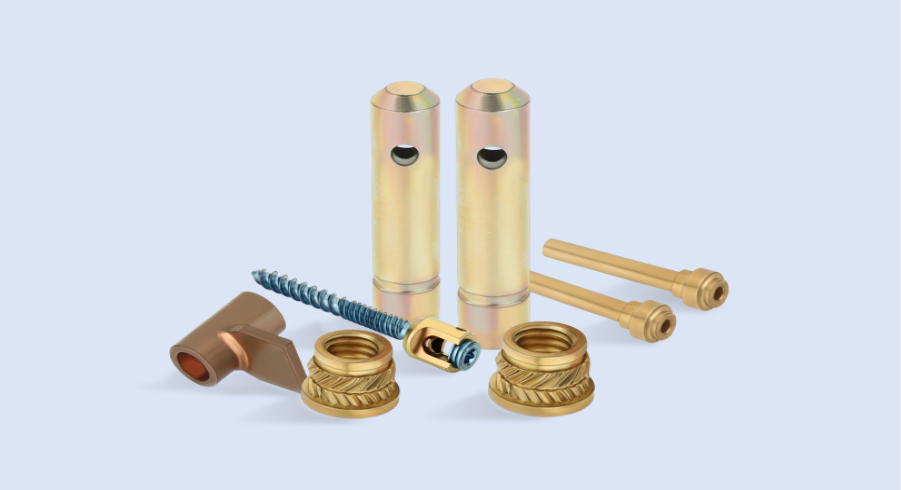
Some fittings require precision machining to achieve specific dimensions and connection features. A CNC component used in such an assembly must meet the required measurements and design specifications. The machining process should suit the component’s intended function.
What should buyers check when selecting a manufacturer or supplier?
When comparing stainless-steel fittings manufacturers, buyers should assess more than product availability. Their ability to meet technical and quality requirements matters just as much.
Consider these points before placing an order:
- Confirm the stainless-steel grade and material specifications.
- Check whether the required fitting types and sizes are available.
- Review dimensional inspection and quality control practices.
- Ask about applicable product standards and test documentation.
- Confirm order quantities, delivery schedules and customisation requirements.
Businesses evaluating an SS fittings manufacturer in India should check whether the manufacturer understands the intended application. They should also assess whether the company can supply the required fitting designs and dimensions.
When comparing stainless-steel fittings manufacturers in India, buyers can review product range, manufacturing processes and quality checks. Similarly, stainless-steel fittings suppliers should provide clear product specifications and help buyers identify suitable options.
For specialised requirements, the accuracy of each CNC component can affect the fit and function of the final assembly. Buyers should therefore check the manufacturer’s machining and inspection capabilities where precision-machined parts are involved.
Businesses sourcing from stainless-steel fittings manufacturers should also confirm product consistency across repeat orders. Comparing different stainless-steel fittings suppliers on these factors can help reduce the risk of receiving unsuitable or inconsistent products.
Choosing fittings that match your application
The right stainless-steel fitting supports a piping system by providing suitable connections, changing flow direction and accommodating differences in pipe size. Understanding the functions of elbows, tees, reducers, couplings and other fittings helps buyers make informed decisions. Material grade, dimensions and connection type should always match the operating conditions.
Before placing an order, businesses should compare product specifications, manufacturing quality and the supplier’s ability to meet application requirements. This is particularly important when sourcing specialised fittings or precision-machined parts, where dimensional accuracy can affect the final assembly. Reviewing these factors also helps when shortlisting stainless-steel fittings manufacturers in India.
Ganesh Precision provides stainless-steel fitting solutions for industrial requirements. Businesses looking for an SS fittings manufacturer in India can explore its product range and discuss their specific needs. Buyers can connect with Ganesh Precision to understand suitable options for their applications.